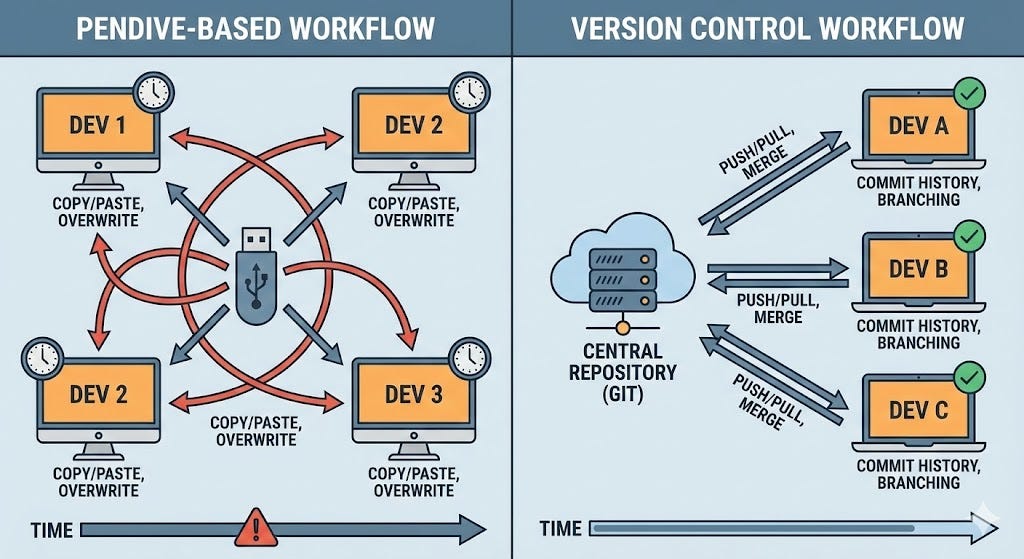
The Pendrive Problem
Why Version Control System Exists
In the early days of software development, managing code was simple because projects were small and usually handled by one developer. But as applications grew bigger and teams became larger, managing changes in code became extremely difficult. After that devlopers make changes using passing the pendrives but after the time when we have to track or update the code it has to be pass the pendrive manually in this case devs can’t handle the code in a clean way, so after that Developers needed a reliable way to track changes, avoid mistakes, and work together without breaking each other’s code.
This necessity led to the creation of Version Control Systems (VCS).
Version control exists to maintain a single source of truth, keep a complete history of changes, and allow multiple developers to collaborate safely and efficiently.
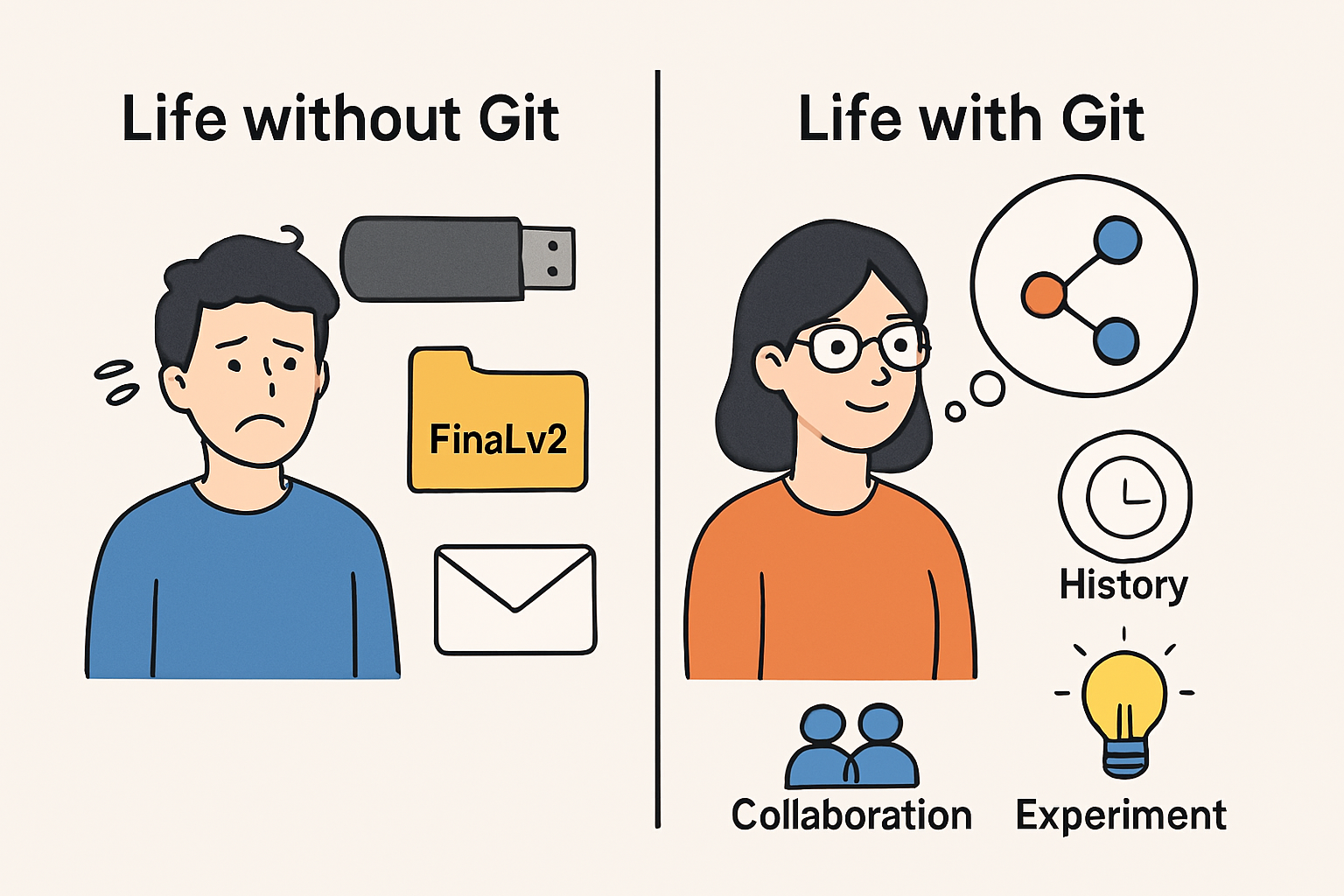
The Pendrive Analogy in Software Development
Before version control systems, developers commonly shared code using pendrives, emails, or shared folders. A typical workflow looked like this:
One developer copied the project to a pendrive
Another developer modified the files and sent them back via email
Multiple folders were created with names like:
project_finalproject_final_v2project_latestproject_latest_final_revised
Over time, no one was sure:
Which folder contained the latest code
Whose changes were included
Whether important updates were accidentally removed
This pendrive-based workflow was slow, risky, and confusing—especially when multiple developers were involved.
Problems Faced Before Version Control Systems
The absence of version control created several serious problems:
1. Overwriting Code
When two developers edited the same file, one person’s work often overwrote the other’s changes, causing loss of effort and time.
2. Losing Changes Permanently
If a file was deleted, corrupted, or replaced by an older version, there was no backup or recovery option.
3. No Collaboration History
Teams had no record of:
Who changed the code
What was changed
Why it was changed
This made debugging and accountability extremely difficult.
4. Confusing File Versions
Multiple folders with slightly different names created chaos and wasted hours just figuring out which version to use.
5. No Safe Rollback
If a new change introduced a bug, reverting to a stable version was nearly impossible.
Why Version Control Became Mandatory
To solve these problems, version control systems were introduced. They provided:
A central repository for code
Parallel development without overwriting
Complete change history
Easy rollback to previous versions
Smooth and fast team collaboration
As software development moved toward large teams, continuous updates, and global collaboration, version control became a mandatory tool, not an optional one.
Pendrive-based Workflow vs Version Control Workflow